
Author and compiler: Ebrahim Yousef Nejad
All rights and intellectual property rights of this note are reserved for the Iranian Trade Center in China.
- Introduction
- Objectives and necessity of analyzing Shanghai’s governance system
- Shanghai’s position in China’s national development policy
- Methodology and sources used
- Political – administrative structure of Shanghai
- Shanghai’s administrative position in China’s political structure
- Local decision-making institutions: Municipality, People’s Congress, Communist Party
- Relationship between local government and central government
- The role of the party in urban management
- Urban policy and macro planning
- Five-year urban plans
- Shanghai Development Plan until 2035
- Innovation, digitalization and smart governance policies
- Public participation and feedback mechanisms
- Economic governance
- Shanghai’s position in the Chinese and global economy
- Pudong Free Zone and Pilot Free Trade Zone
- Fiscal policies, capital raising, and economic institutions
- Shanghai’s role in international projects like the BRI
- Infrastructure and urban governance
- Public transportation management (metro, BRT, shared bicycles)
- Management of water, sewage, electricity and waste resources
- Urban planning: density, green space, affordable housing
- Dealing with natural disasters and urban resilience programs
- Smart and digital governance
- Shanghai’s “Smart City”: Infrastructure and Strategies
- Open data systems, management dashboards, and artificial intelligence in governance
- Digital Social System (Social Credit System)
- Cybersecurity and data protection
- Social and cultural governance
- Community Participation in Local Governance
- Education, health and social welfare system
- Supporting vulnerable groups and minorities
- Cultural policies and urban branding
- Environmental governance
- Strategies to reduce air, water, and soil pollution
- Clean energy policies and urban greening
- Parks, green space and biodiversity management
- Shanghai International Environmental Ranking
- Urban Diplomacy and International Governance
- Shanghai’s foreign relations with global cities
- Shanghai’s role in international organizations (Metropolis, UCLG)
- Policies to attract elites, students, and international companies
- The role of international exhibitions and events (CIIE, etc.)
- Governance Challenges and Constraints in Shanghai
- The balance between centralization and decentralization
- The challenge of inequality and class divide
- Internal migration and population management
- Environmental pressures and housing challenges
- Lessons Learned and Suggestions for Iran
- What elements of Shanghai governance can be adapted?
- Institutional, cultural and economic considerations
- Proposed models for Iranian metropolises
- Opportunities for Iran-China cooperation in the field of urban governance
- Introduction
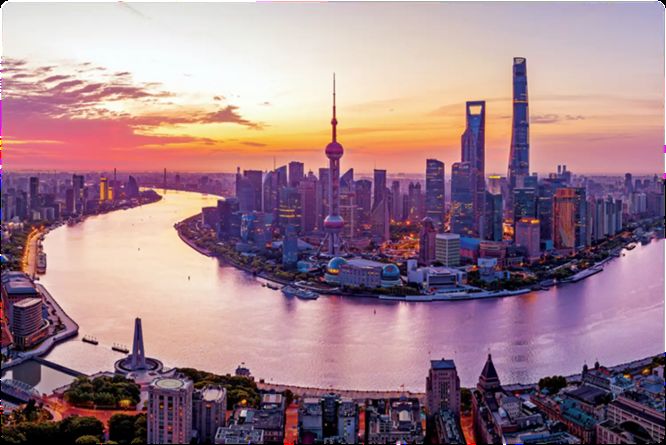
In the era of rapid change in the 21st century, cities have become key players in global governance. National development is no longer conceivable without effective urban governance, especially in a populous and developing country like China, where megacities like Shanghai serve as the driving force of the economy, innovation, and national policymaking. With a population of over 25 million, Shanghai is one of the most advanced and sophisticated examples of urban governance in the world. It is not only China’s financial, logistical, and technological hub, but also a symbol of the successful transformation of governance structures within a single-party, centralized political system.
In recent years, Shanghai has become one of the most important laboratories of innovative governance in the world, within the framework of the Communist Party of China’s macro policies and under the strategies of the five-year plans. The implementation of comprehensive plans in the fields of smart city, digital governance, social participation, sustainable environment, and regional economic development indicates that the Shanghai model has become a global study model in the field of urban planning and governance, beyond a local experience.
The aim of this report is to comprehensively analyze the various dimensions of governance in Shanghai, identify its institutional and executive mechanisms, and examine the possibility of exploiting this model in countries such as Iran. Since Iran-China relations have entered a more strategic phase in recent years and the discussion of urban, infrastructure, and technological cooperation is raised in the form of bilateral documents, a detailed understanding of the Shanghai experience can open new horizons for Iranian urban planners. This report attempts to present a multifaceted, data- and analysis-based picture of urban governance in Shanghai and, at the same time, to address lessons learned that can be adapted in the field of urban governance in Iran.
- Political – administrative structure of Shanghai
Shanghai is not only one of the most populous cities in China but also one of the most sophisticated examples of urban governance in the world. Once a colonial port controlled by several Western powers, this metropolis has today become a model of Chinese urban management, a combination of centralization and administrative innovation.
2.1 Shanghai’s unique administrative location
In the political division of the People’s Republic of China, Shanghai is one of the four municipalities directly under the central government (along with Beijing, Tianjin, and Chongqing). This means that Shanghai is not under the jurisdiction of a province, but is directly under the control of the central government of China and the State Council in Beijing.
This special status was first established by the Communist Party in the 1950s, during the consolidation of the People’s Republic of China. Since then, party leaders have used Shanghai as a laboratory for modern policymaking.
2.2 The role of historical leaders in the development of Shanghai governance
One of the most influential figures in the transformation of Shanghai’s governance is undoubtedly Jiang Zemin, who was the Communist Party Secretary of Shanghai before becoming the leader of the whole of China. He established many new management institutions, policies for attracting capital and developing the Pudong Free Trade Zone in the late 1980s. Later, his successors, such as Zhu Rongji – the future Premier – also emerged from the Shanghai management body.
In fact, since the 1990s, Shanghai has served as a “cadre training school for the leadership of the Communist Party of China”; many members of the Party’s Politburo in Beijing have experience governing in Shanghai.
2.3 Dual structure: government alongside the party
Like the rest of China, Shanghai is governed under a dual system of governance. On the one hand, the Municipal Government, headed by the mayor, handles administrative affairs; on the other hand, the Shanghai Communist Party Committee holds real power.
Currently, the mayor of Shanghai is nominated and appointed by the Chinese premier, but the selection is made in accordance with the decisions of the party committee. The main power, however, lies with the Shanghai Party Secretary, who is appointed by the party central committee in Beijing and is often one of the people with the prospect of rising to the top of the country. For example, Han Zheng, a current member of the State Council, was a former Shanghai Party Secretary.
2.4 Internal administrative divisions and multilayer structure
Shanghai is divided into 16 urban districts, each with its own government, people’s council, and party committee. This structure allows for multi-layered yet unified urban governance.
The most prominent is Pudong New Area, which was transformed from farmland on the eastern bank of the Huangpu River into a financial and international hub in the 1990s. Pudong has powers beyond those of ordinary districts, and policies such as special banking regulations, attracting foreign companies, and piloting new technologies are being implemented.
2.5 Consultative and participatory institutions
In addition to the formal government and party structure, Shanghai also has semi-formal consultative institutions such as the People’s Political Consultative Conference (CPPCC), where representatives of minorities, academics, trade unions, and civil society organizations participate in the policy-making process.
Although their role is mostly advisory, they influence city decisions and help increase transparency and public satisfaction.
2.6 Digital coordination and governance
In the past decade, Shanghai has succeeded in integrating information and institutional interaction by launching a digital governance system called One Netcom Office. In this system, the municipality, police, health, environment and other agencies share real-time information from their systems and use artificial intelligence to make immediate, data-driven decisions.
3. Urban policy and macro planning in Shanghai
Shanghai has been at the forefront of innovative urban policymaking in the People’s Republic of China since the 1990s. Unlike other regions that have developed more top-down and through national projects, the city has a high capacity for localisation, experimentation and rethinking of urban policymaking. The urban development model in Shanghai is based on medium-term (5-10 year) perspectives, advanced spatial planning tools and multi-layer institutional coordination.
3.1 Five-year plans and development roadmap
Like the national level, Shanghai also formulates a comprehensive document called the Five-Year Urban Development Plan every five years, which includes economic, environmental, cultural, social and technological goals. Currently, Shanghai is implementing the 14th Development Plan (2021–2025), which places special emphasis on the following topics:
Transforming Shanghai into an international financial center in East Asia
Expanding digital infrastructure and smart cities
Improving the quality of urban life, housing, and public transportation
Environmental protection and carbon emission reduction
Strengthening industrial innovation, especially in artificial intelligence and biotechnology
Result: According to the official municipal report, in just the first two years of the implementation of the 14th Plan, Shanghai managed to increase its GDP to more than 4 trillion yuan and reach above 90% in the public satisfaction index with municipal services.
3.2 Specialized policy-making and advisory institutions
Shanghai does not rely solely on government institutions in its urban planning process. The city also has numerous research and consulting institutions, such as:
Shanghai Urban Development Studies Center
Shanghai Academy of Urban and Regional Planning
Fudan Institute of Public Policy
They actively participate in the formulation and evaluation of metropolitan policies. These institutions help urban decision-makers make more strategic decisions by using GIS data, analyzing macro trends, and building future scenarios.
3.3 Comprehensive spatial development plans
Shanghai has a master plan for urban development until 2035, which was officially approved in 2017. In this plan, the city is divided into five main functional areas:
Historic Center: Focus on Cultural Texture Preservation and Gradual Renovation
Lujiazui Financial District: China and Asia’s Financial Hub
Zhangjiang Innovation Zone: High-tech Hub
Yangshan Port Area: Global Logistics and Trade Hub
Suburban livable areas: developing green and smart towns
Result: According to an assessment by the journal Nature Sustainability , Shanghai was ranked among the world’s 10 most successful cities in sustainable urban development policymaking in 2022.
3.4 Focus on environmental and climate governance
Since the early 2010s, tackling air pollution, managing waste, and promoting green infrastructure have become policy priorities in Shanghai. Policies such as:
Complete ban on fossil fuels in public transport fleets by 2030
Installation of more than 300,000 air quality monitoring cameras
Creating 400 urban parks as part of the “City in a Garden” plan
Reforming construction laws by requiring green standards
Result: In 2023, Shanghai’s average air quality index (AQI) dropped from 76 to 53, one of the best environmental performances among industrial cities in Asia.
3.5 Using technology in urban policymaking
Shanghai is one of the first cities in the world to implement digital governance at the local level. The “City Brain” platform, which combines real-time data, machine learning, and intelligent control, is at the disposal of the municipality for traffic management, crisis management, and resource allocation.
By integrating public service platforms, Shanghai residents can receive more than 900 government services electronically through the “Shanghai Super App”.
4. Public participation system and local governance in Shanghai
Despite following the centralized governance structure of the People’s Republic of China, Shanghai has managed to implement a rather unique model of social participation, citizen feedback, and multi-level local governance. These features, combined with technology and smart institution-building, have allowed citizens to play an active role in urban decision-making processes, monitoring, and even designing some policies.
4.1 Structure of Neighborhood Committees
At the local level, the most important instrument of participatory governance in Shanghai are the Neighborhood Committees (居委会 – Ju Wei Hui). These institutions, which exist in all urban areas and even large buildings, are composed of elected citizens and act as intermediaries between the people and the local government.
Their duties include:
Monitoring the implementation of urban laws (health, waste, security)
Participation in resolving local and family disputes
Collecting opinions and transmitting feedback to upstream institutions
Providing welfare services such as supporting the elderly and children
Real-life example: In Changning District, there are more than 450 active neighborhood committees that played a key role in tracking vaccinations, voluntary quarantines, and distributing emergency aid during the COVID-19 pandemic.
4.2 Limited local elections with party supervision
Unlike the national level, where there are no general elections, Shanghai – like other Chinese cities – holds semi-free local elections to elect members of neighborhood committees and city councils. Although candidates must be approved by the Communist Party, they feature genuine competition and voluntary participation.
Result: According to municipal statistics, in the 2021 Regional People’s Council elections, Shanghai’s voter turnout rate was over 90%, one of the highest in the country.
4.3 The “12345” system for citizens to communicate with the government
One effective innovation in Shanghai is the launch of the 12345 public contact system, which allows citizens to directly communicate their complaints, suggestions, and problems to the local government via phone, text message, or app. The system, using artificial intelligence and automatic classification, helps city administrators provide appropriate responses within 24 to 72 hours.
Statistics for 2022: More than 5 million public messages have been registered in the system, 92% of which have been responded to in less than 72 hours.
4.4 Examples of public participation in policymaking
Shanghai has in several cases conducted urban policymaking with the consultation or active participation of residents. These include:
Development of a renovation plan for the historic Yuyuan Market with public consultation
Rerouting of some metro lines based on online voting
Implementing the “Small Local Park” project in residential areas based on an online survey
This participatory model, known in Chinese as “放到共建客全客” (participatory and shared governance), has been the official policy of the city government for the past decade.
4.5 Digital Participation Platforms
With the development of digital infrastructure, platforms such as “YiBan YiJian” (One Opinion, One Change) allow residents to submit proposals and vote on urban projects via mobile apps. For major infrastructure projects, the municipality is required to provide at least one week of digital participation opportunities for residents around the project.
5. Digital Innovations in Shanghai’s Urban Governance
As one of the world’s pioneers in smart city development, Shanghai has been able to apply digital technology not only for public services, but also to redesign governance structures, increase transparency, accelerate decision-making, and enhance citizen satisfaction. Digital innovations in Shanghai have directly impacted the quality of policymaking, urban management, and governance accountability.
5.1 Integrated Digital Governance Platform (Shanghai Urban Operation Center)
One of the most important projects of Shanghai’s smart city is the creation of an urban operations center that works with more than 100 real-time databases from various organizations. By combining data from the fields of transportation, energy, environment, relief, and health, the center enables rapid monitoring, analysis, and response to crises and resource management.
Case in point: During the 2020 flood crisis, the center was able to activate emergency evacuation routes in less than 20 minutes by analyzing rainfall forecasts, traffic, and the location of relief resources.
5.2 Shanghai “City Brain” Project
Inspired by the Hangzhou model, Shanghai has also launched the City Brain system since 2019. The system uses the following technologies:
Machine learning to analyze population behavior patterns
Artificial intelligence to predict transportation demand, congestion, or pollution
Smart cameras and IoT for real-time surveillance
Result: According to official statistics, the average response time to traffic incidents in Shanghai has decreased from 9 minutes to 3 minutes, and the accident rate at the city’s 20 main intersections has decreased by 45%.
5.3 Super App Citizenship Application
All government services for Shanghai citizens are provided in a unified app called “Suishenban” (随申办). The app provides access to over 900 public services, including:
Renewal of ID card
Paying bills
Getting a treatment appointment
Public transportation reservations
Report urban violations
Inquiry about children’s educational status
Result: According to an official survey, 84% of users of this app found it “very useful” in improving the quality of interaction with government institutions.
5.4 Using data for urban decision-making
Shanghai is one of the first cities to implement the concept of Data-Driven Government. In this framework, city policymakers receive data-driven analytics before making major decisions (such as infrastructure construction or pricing reforms). These analytics come from integrating GPS data, cameras, online purchases, public feedback, and other sources.
5.5 Security, privacy, and digital justice challenges
Of course, digital governance in Shanghai has also faced challenges, including:
Concerns about excessive surveillance
Lack of digital access for the elderly and low-income groups
Risk of personal data disclosure
The gap between central and suburban areas in access to smart services
To address these challenges, the municipality has attempted to strike a balance between innovation and citizen rights by developing a public data governance charter and improving digital literacy infrastructure.
- Smart and digital governance
6.1 Early response and early warning system
In the early days of the virus outbreak in China (January 2020), Shanghai immediately activated the Urban Crisis Center. Using data from the Urban Operations Center and the “City Brain” artificial intelligence system, high-risk areas were identified and targeted quarantines were implemented.
Example: Before implementing a general quarantine, areas with high hospital density, train stations, and high-traffic residential areas were identified through a risk analysis algorithm.
6.2 The role of local committees in crisis control
Neighborhood committees (居委会) played a key role in controlling local gatherings, distributing hygiene supplies, and following up on suspicious cases. With the help of local volunteers, these institutions implemented the following measures:
Distribution of masks and disinfectants
Patient registration in the health system
Monitoring entry and exit to buildings
Helping seniors access services
In the Pudong district, more than 20,000 volunteers participated in the management of 1,200 neighborhoods.
6.3 Digital “Health Code” System
Shanghai was one of the first cities to implement a digital health code (Health QR Code) on the platform of the “Suishenban” application. This code received a green, yellow or red color based on medical information, travel, contact with patients and vaccination status, and was a permit to pass and access public spaces.
Result: With over 50 million daily scans, the system helped economic activities continue with minimal disruption.
6.4 Supply of goods and services under quarantine conditions
During the full lockdown in 2022, Shanghai Municipality implemented daily door-to-door distribution of essential goods and hygiene items with the help of digital platforms such as Meituan and Ele.me. Special lanes were also set up for logistics trucks to maintain the city’s supply chain.
6.5 Transparency and government – people communication
Throughout the crisis, the Shanghai Municipal Government held daily official press conferences. During these briefings, daily statistics, restrictions, treatment news, and policy changes were announced in a transparent manner. Citizens could also ask questions through the 12345 system and receive answers within 24 hours.
According to a survey by Fudan University, more than 70% of residents said they were satisfied with the amount of official information and its accuracy.
6.6 Lessons Learned and Strengths of the Shanghai Model
Shanghai’s successful management of the Corona crisis stood out for the following reasons:
Multi-layer governance structure (government-neighborhood-volunteers)
Leveraging real-time data and technology
Active participation of citizens in the implementation of policies
Focusing on simultaneous social and economic resilience
Utilizing advanced logistics infrastructure
7. Comparative comparison of Shanghai’s urban governance with major cities in the world
Shanghai, with its unique characteristics of China’s governance system, is different from other advanced cities in the world in many ways; however, it is comparable and even leading in many areas. This section will conduct a comparative comparison of the structure and performance of urban governance in Shanghai with cities such as Seoul, Singapore, Dubai, and Tehran to better identify differences and adoptable patterns.
7.1 Comparison with Singapore : Order and Technology
Both cities have a centralized political structure, long-term strategic planning, and a high dependence on technology. Common points:
7.2 Comparison with Seoul : Transparency and Participation
Seoul is a leader in terms of public participation, information transparency, and open governance. In contrast, Shanghai emphasizes order, centralized control, and speed of implementation.
7.3 Comparison with Dubai : Infrastructure and Global Perspective
Dubai and Shanghai are both known as regional logistics and economic hubs. But:
7.4 Qaise with Tehran : Opportunities for Adaptation
Tehran, as the capital of Iran, has some similarities (population size, environmental pressure, centralization of decision-making) with Shanghai; but it has major differences:
Conclusion:
Shanghai is not only comparable to the world’s major cities in terms of population and economic dimensions, but also offers an alternative model for urban governance in countries with centralized structures with its unique approach of “smart and technological control”. Its comparative study reveals the strengths and weaknesses of the models and paves the way for strategic adaptation for developing cities (such as Tehran).
8. Adaptable Capabilities of the Shanghai Governance Model in Iran
The Shanghai governance model is based on a combination of institutional centralization, process digitization, and structured social interaction. Although China’s political and cultural systems are fundamentally different from Iran’s, many of the technical and implementation components of this model, especially in the areas of urban management, technology, neighborhood participation, and crisis response, have the potential to be adapted and localized in large Iranian cities.
8.1 Development of Urban Operation Centers
One of the pillars of Shanghai’s smart governance is the existence of an advanced operations center that aggregates and analyzes real-time data from various areas (traffic, waste, municipal services, security, health, energy, etc.).
Adaptability in Iran: Tehran Municipality and some metropolitan cities have the basic infrastructure of these centers. By connecting data from the municipality, emergency services, police, fire department, and public transportation, a basic model of a “city brain” can be achieved.
8.2 Formation of neighborhood committees with formal power and digital monitoring
In Shanghai, local committees (居委会) are supported by the government and play a formal role in population, crisis, health, and participation management. These committees have been very effective during the COVID-19 era.
In Iran: Neighborhood social councils exist in Tehran and some cities, but they are largely without executive power or budget. By reviving this structure in the form of digital committees, real participation of residents could be enabled.
8.3 Digital Single Window for Municipal Services
Shanghai’s “Suishenban” system allows citizens to receive more than 2,500 municipal, administrative, tax, and social services through a single app.
In Iran: Systems such as “My Tehran” or “E-Government Platform” have been established, but their integration, coverage, and usability are limited. Data integration, API standardization, and inter-device connectivity are essential for this model.
8.4 Developing pilot cities for innovative governance
China has developed the “Urban Governance Pilot Zones” model, and in Shanghai, areas such as Pudong and Songjiang act as laboratories for technology, participation, and policymaking.
Recommendation for Iran: Establish smart governance pilots in cities such as Kish, District 22 of Tehran, or the new city of Pardis to test new technologies and models without common structural complexities.
8.5 Digital Urban Resilience in Crises
In Shanghai’s experience with COVID-19, logistical coordination, information transparency, data analysis, and resource distribution through digital tools ensured urban resilience.
In Iran: By developing a “digital crisis response chain,” from earthquake and flood prediction to emergency aid distribution, urban preparedness can be structurally improved.
8.6 Training elites and urban managers with an Asian approach
By training thousands of urban managers based on Eastern philosophy and modern technology, China was able to bridge the gap between decision-making and execution. In Iran, there is a strong need for a generation of managers familiar with data-centricity, technology, and human communication.
Proposal: Create joint courses with Asian universities (such as Fudan University or Tsinghua) to teach urban governance to municipal and provincial administrators.
8.7 Redesigning budgeting and performance evaluation models
In Shanghai, projects are implemented with precise KPIs and a real-time monitoring system. The devices are evaluated based on the achievement of budget targets and citizen satisfaction.
In Iran: Institutions such as municipalities can utilize performance evaluation models based on results, rather than just the volume of spending.
Conclusion
Although there are structural and political differences between Iran and China, the Shanghai experience as an example of smart urban governance in East Asia has high potential for adaptation in Iran. The combination of technology, smart focus, social participation, and resilience in this model can be the basis for developing a roadmap for reforming the urban governance structure in Iran.
9. Conclusion and Policy Recommendations for Iran
The urban governance experience in Shanghai is one of the outstanding examples in the world, combining centralized governance, advanced technology, social participation, and long-term strategic planning. In a comparative perspective, this model is based on “integrated decision-making, data utilization, and rapid response to needs,” in contrast to urban governance in many Western countries that emphasize local democracy and institutional separation.
In the urban space of Iran – especially Tehran, Mashhad, Shiraz, and Isfahan – challenges such as multiple decision-making institutions, institutional incoherence, weak data infrastructure, and superficial social participation are evident. The Shanghai experience shows that even in illiberal structures, high efficiency in urban governance can be achieved through the intelligent use of technology, the use of semi-structured participation models, and systematic evaluations.
9.1 Policy recommendations for policymakers and municipalities
🔹 Creating smart urban command centers in metropolises
Municipalities should set up digital city operations centers by aggregating city data from various sources (traffic, health, pollution, crisis management, city services). A model similar to Suishenban could be an effective starting point.
🔹 Launching an innovative governance pilot in free zones or new cities
Instead of implementing macro policies on a national scale, it is suggested that one or two urban areas (such as District 22 of Tehran or Kish) be selected as “pilot cities” and a digital-participatory governance model be implemented in them.
🔹 Reviewing the status and function of local councils
Strengthening neighborhood committees with real powers, a clear budget, and a digital system for communicating with citizens can elevate the role of these institutions from “symbols” to “actors.” Shanghai’s experience during the pandemic showed how effective structured local participation is in building a city’s resilience.
🔹 Designing a performance evaluation system for urban managers based on citizen data and satisfaction
KPI-based systems, such as those implemented in Shanghai, should be used to evaluate the performance of urban areas and municipal employees. Transparency of project data and its linkage to citizen feedback is a key factor in accountable governance.
🔹 Developing a digital roadmap for municipalities
Iran needs to develop a ten-year plan for developing smart city services, data infrastructure, cybersecurity, and integrated city platforms. This plan must be approved by the city council and local government to be binding.
9.2 Suggestions for governing and educational institutions
🔸 Establishing a national urban governance center with an Asian model
An executive research center focusing on the East Asian experience and collaborating with regional universities (Fudan, Tsinghua, Singapore NUS) could be the basis for producing indigenous knowledge for advanced urban governance in Iran.
🔸 Training a new generation of technology-oriented urban managers
With cooperation between municipalities and universities, specialized courses in digital urban management, data-drivenness, social participation, and crisis resilience should be launched. Educating future managers with the Asian model is a requirement, not a choice.
Final conclusion
In a world where cities are recognized as engines of national development, urban governance is no longer limited to waste management, traffic, or construction; it requires designing responsive, intelligent, participatory, and resilient structures. Shanghai is an example of this model in a non-Western context that could be inspiring for Iran, especially in its transition from traditional models.
Of course, adaptation without localization will not be effective. It is necessary for Iranian urban policymakers, while maintaining national authority and understanding the country’s cultural, social, and environmental needs, to chart a new path for Iranian urban governance with a forward-looking perspective.